Picking a cutting process isn’t complicated. But people overthink it constantly.
Four things matter. Material. Precision. Timeline. Budget.
That’s it.
Match those four to the strengths of each method and you’ve got your answer. Laser, plasma, waterjet, EDM, CNC milling—each one shines in different situations.
Wrong choice? You’re looking at quality problems, blown timelines, or budgets that spiral. Right choice? Parts come out clean, on time, at a price that makes sense.
Let’s break it down.
Snapshot: What You Need to Know
| Factor | Quick Details |
| Cut Quality Over Time | Laser, waterjet, EDM, CNC stay consistent with maintenance; plasma needs more touch-up work on repeat runs |
| Cost Range | Plasma cheapest • Laser middle • Waterjet and EDM pricier • CNC depends on complexity |
| Materials | Metals, plastics, composites, ceramics, rubber, foam—method determines what works |
| Thickness | Laser handles thin-mid • Plasma loves thick • Waterjet does thin to extra thick • EDM thin-mid only (conductive) |
| Best Applications | Laser for speed + precision • Plasma for heavy steel • Waterjet for heat-sensitive • EDM for ultra-tight tolerances • CNC for 3D shapes |
| Market Direction | More demand for precision thin metals, prototyping, and hybrid workflows |
What Each Cutting Method Actually Does Best
Quick rundown before we get into selection criteria.
Laser Cutting
Thin to mid-thickness metals and plastics. That’s laser’s wheelhouse.
Accuracy matters to you? Clean edges critical? Laser.
Heat distortion stays minimal. Turnaround stays fast. Hard to beat for the right applications.
Plasma Cutting
Thick conductive metals. Steel especially.
Fast. Affordable. Not the tightest tolerances, but plenty good for structural work and heavy fabrication.
Don’t need surgical precision? Plasma gets the job done cheaper than anything else.
Waterjet Cutting
This one cuts almost anything. Metal, plastic, rubber, foam, ceramic, tile.
Zero heat. Zero warping. That’s the selling point.
Thick materials? Heat-sensitive stuff? Waterjet handles both without breaking a sweat.
EDM (Electrical Discharge Machining)
Conductive materials only. But the precision is unreal.
Hard metals. Intricate cavities. Tolerances measured in thousandths.
When nothing else can hit the spec, EDM can. Slower, yes. Worth it when accuracy is non-negotiable.
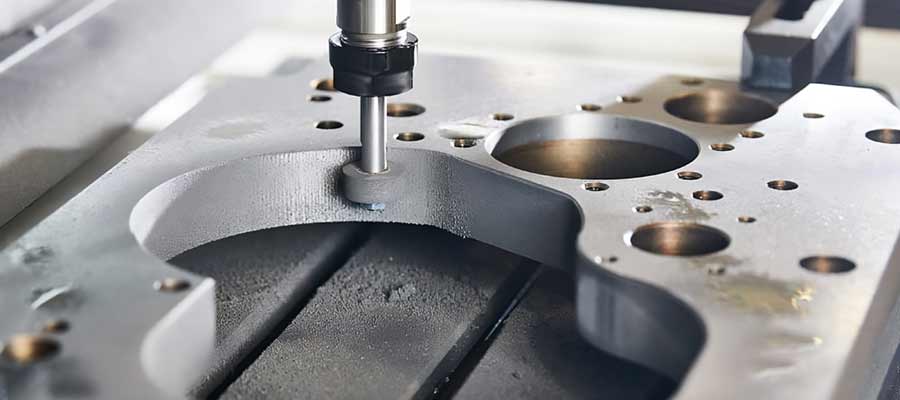
CNC Milling
Different beast entirely. Rotating tools remove material mechanically.
Complex 3D shapes. Threaded holes. Pockets. Fine surface finishes.
Not technically cutting in the traditional sense. But often the right answer anyway.
1. Start With Your Material
This is step one. Always.
- Thin-to-medium metals: Laser. Speed plus clean edges.
- Thick metals: Plasma or waterjet. Both handle heavy stock efficiently.
- Heat-sensitive materials: Waterjet. No heat whatsoever.
- Hardened or exotic alloys: EDM or CNC milling. Maintain accuracy on tough stuff.
- Plastics and composites: Laser or waterjet. Either works.
Here’s the rule. If heat might distort your material, cross plasma off the list. Go laser or waterjet instead.
2. Figure Out Your Tolerance Requirements
Different methods, different precision levels. Know what you actually need.
- Tightest tolerances: EDM and laser. Thousandths of an inch territory.
- High precision plus 3D geometry: CNC milling.
- General precision: Waterjet.
- Looser tolerance (still fine for lots of work): Plasma.
Want minimal finishing after the cut? Laser, EDM, or CNC. Those three leave the cleanest edges.
3. Factor In Speed and Volume
Timeline matters. A lot.
- Fastest on thin material: Laser. Nothing touches it.
- Fastest on thick metal: Plasma. Rips through heavy plate.
- Slower but surgical: EDM. Patience required.
- Balanced speed and flexibility: CNC milling.
- Moderate speed, high capability: Waterjet.
High-volume production runs? Laser or plasma.
Low-volume specialty work? CNC or EDM makes more sense.
4. Understand What Drives Cost
Pricing isn’t random. Several factors:
- Thickness: Thicker stock costs more. Every time.
- Material type: Hardened alloys and exotics eat up time and tooling.
- Tolerances: Tighter specs mean longer setup, longer cycle time.
- Complexity: Intricate shapes take longer. Might need special tooling.
Method-by-method breakdown:
- Plasma: Cheapest option out there.
- Laser: Good balance of cost and precision.
- Waterjet and EDM: Higher price tag. Slower processes.
- CNC milling: All over the map depending on tooling and part complexity.
5. The Decision Framework
Simple approach. Works every time I’ve used it.
Step 1: Nail Down Your Material
Hardness. Thickness. Heat sensitivity. Start there.
Step 2: Define Your Tolerance
Ultra-tight specs or complex geometry? EDM or CNC likely your best bet.
Step 3: Set Your Timeline
Parts needed yesterday? Laser or plasma.
Complex low-volume precision work? CNC or EDM.
Step 4: Weigh Cost Against Quality
Cheapest method might need more finishing work after. Factor that in.
Step 5: Pick a Shop With Options
Shops running laser, waterjet, plasma, EDM, and CNC under one roof? More flexibility. Better pricing. Trust me on that.
6. Where the U.S. Market Is Heading
Couple trends worth knowing:
- High-precision cutting demand climbing. Aerospace, defense, medical, robotics all driving it.
- More prototype and short-run work. Reshoring is real. Supply chain headaches pushed companies domestic.
- Hybrid workflows picking up. Laser plus CNC. Waterjet plus CNC. Tighter quality control.
- Digital CAD/CAM and automation shrinking lead times everywhere.
Smart manufacturers pick processes strategically. Partner with shops that have the equipment to flex.
Cutting Method Comparison
| Method | Best For | Precision | Speed | Cost |
| Laser | Thin-mid metals, plastics | High | Fast | Mid |
| Plasma | Thick steel, heavy plate | Moderate | Very Fast | Low |
| Waterjet | Heat-sensitive, thick stock | Good | Moderate | Mid-High |
| EDM | Hard metals, tight specs | Very High | Slow | High |
| CNC Milling | 3D shapes, threads, pockets | High | Moderate | Varies |
FAQs
Which cutting process is most accurate?
EDM takes the crown. Laser and CNC machining come close behind.
What cutting method costs the least?
Plasma. Hands down the most budget-friendly for thick metals.
Can waterjet really cut anything?
Pretty much. Metal, plastic, rubber, tile, composites, ceramics. No heat distortion on any of it.
When does CNC milling beat cutting?
3D shapes. Threaded features. Deep pockets. Tight-tolerance surfaces. Stuff cutting alone can’t pull off.
Best option for prototypes?
Laser or CNC milling. Fast turnaround, accurate parts, minimal setup hassle.
How do I figure out which process fits my job?
Start with material and thickness. Add tolerance requirements. Factor timeline. Balance cost against finishing needs. That framework handles 90% of decisions.
Why Styner Machine Tools
Styner Machine Tools runs advanced CNC machining and cutting. Laser, plasma, waterjet, EDM, high-precision milling. All of it.
U.S.-based technicians who actually know what they’re doing.
Prototypes, short runs, full production—doesn’t matter. We help you pick the right process and deliver results that hold up.
Precision manufacturing. Experienced team. Quality standards that mean something. That’s the Styner difference.