Here’s the situation most manufacturers face.
You need to increase output. But you can’t sacrifice precision. Can’t compromise on safety. Can’t blow up the budget.
That’s the challenge. And it’s not a small one.
CNC machining solves it. Has been solving it for decades now. Computer-driven accuracy combined with fast automated cycles means you can produce high-quality parts at scale—quickly, reliably, and without generating mountains of scrap.
It’s become the backbone of production for manufacturing teams across the country. And for good reason.
Let me break down exactly how CNC impacts industrial manufacturing today.
Snapshot
| Factor | What to Know |
| Typical tolerances | ±0.0005″ to ±0.002″ depending on material and operation |
| Common materials | Aluminum, steel, stainless, titanium, plastics, composites |
| Cost range | $75–$150/hour based on machine type and complexity |
| Part lifespan | Years to decades depending on application |
| Market trend | Demand rising from reshoring, automation, aerospace growth |
Why CNC Drives Efficiency
Industrial production involves tight deadlines. Strict tolerances. High-mix part requirements. Customers who don’t accept excuses.
CNC machining handles all of that.
Automation reduces labor. Once a CAD/CAM program is loaded, a CNC mill or lathe runs with minimal supervision. Consistency improves. Human error drops. You’re not dependent on whether your best operator showed up today or whether they’re having a good shift.
I’ve seen shops struggle because their best machinist retired. Decades of knowledge walked out the door. CNC changes that equation. The knowledge lives in the program. Anyone who can set up the machine can run it.
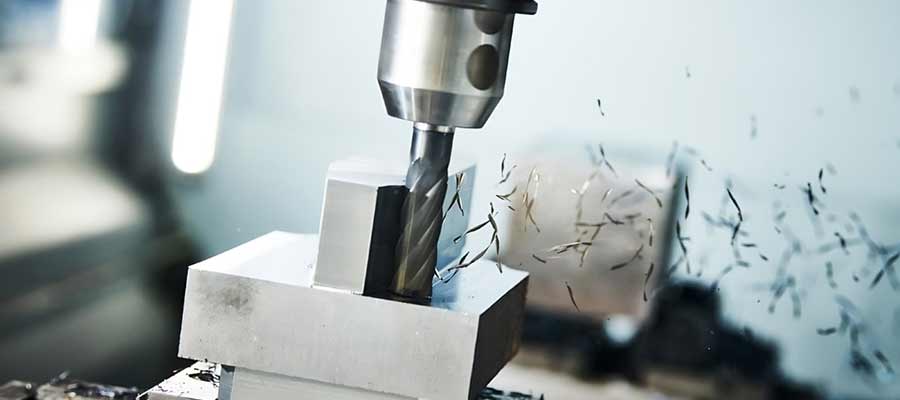
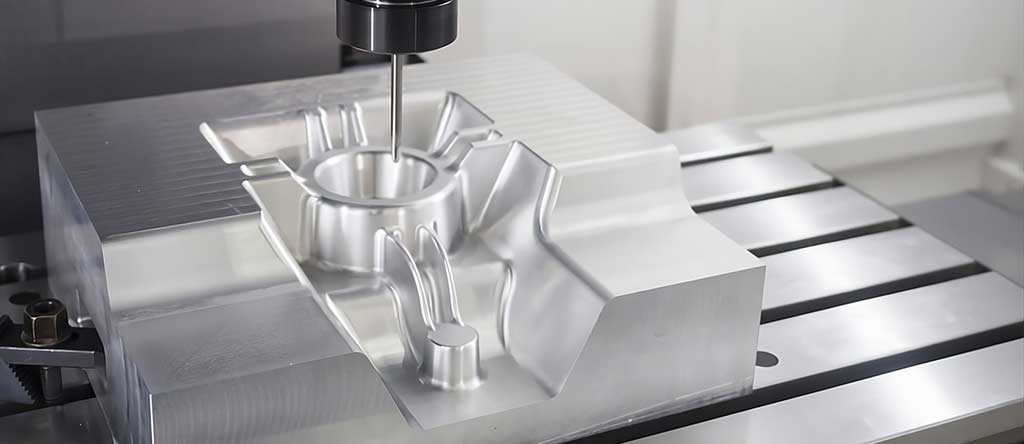
Cycle times are fast. Drilling, milling, turning, tapping, pocketing—all happening at speed. Multi-axis configurations let you complete parts in a single setup. No unnecessary handling. No repositioning errors. No accumulating tolerance stack-up from multiple operations.
Changeovers are quick. Switch jobs by loading a new program. No complete line reconfiguration. Perfect for short runs, prototypes, and mixed batches. The flexibility matters.
And the machines run overnight. Lights-out production is real. Proper automation means your equipment keeps making parts while everyone’s home sleeping. Wake up to finished work.
That kind of throughput matters when you’re competing globally.
Precision and Repeatability
Industrial applications demand repeatability. Engine components. Housings. Brackets. Fixtures. Parts that have to fit together perfectly, every single time, across thousands of units.
CNC delivers that.
Ultra-tight tolerances are standard. We’re talking dimensions smaller than a human hair. CNC machines hit tolerances within microns consistently. Parts assemble correctly. They perform as designed. They don’t come back as warranty claims.
And the results stay consistent across thousands of parts. Once the toolpath is validated, you can run it forever. Part one matches part ten thousand. That’s not hope—that’s how it actually works. I’ve seen production runs where the last part measured identical to the first. That’s CNC.
Multi-axis capabilities open up complex geometries. Shapes that would be impossible with manual equipment. Or extremely costly. CNC handles them routinely. Less secondary machining. Less rework. Faster inspection. Better parts.
Material flexibility is built in. Aluminum and steel for most jobs. Stainless and titanium for strength or corrosion resistance. Plastics and composites when that’s what the application needs. One shop, multiple materials, same precision.
That range lets manufacturers experiment and innovate without major tooling investments. Try something new. If it doesn’t work, try something else. The machine doesn’t care.
Innovation and Customization
CNC isn’t just for high-volume production. It’s powerful during development too.
Rapid prototyping is a big deal. CNC-machined prototypes are functional. Made from actual production materials. You can test fit, strength, and real-world performance—not just look at a plastic model and hope it works.
Engineering iterations happen fast. Adjust the CAD file. Regenerate toolpaths. Machine the next version. Days instead of weeks. No waiting for new tooling. No arguing with vendors about changes.
I’ve worked with engineering teams who went through five design iterations in two weeks. Try that with traditional tooling. You’d still be waiting for the first revision.
Custom work is cost-effective. Low-volume, specialty, one-off parts—CNC handles them with minimal setup time. Small-batch production that would have been uneconomical before? Now it’s routine. The math works.
Reverse engineering keeps old equipment running. When components get discontinued, CNC lets you replicate or improve them. Machines that should have been scrapped years ago? Still running because someone measured the old part and made new ones.
That flexibility is worth money. Real money.
CNC vs. Other Methods
CNC overlaps with other processes. Each has strengths.
| Process | Best For | Strengths | Limitations |
| CNC Machining | Precision parts, metals | Tight tolerances, repeatability | Material waste |
| 3D Printing | Rapid prototypes | Low waste, fast turnaround | Weaker materials |
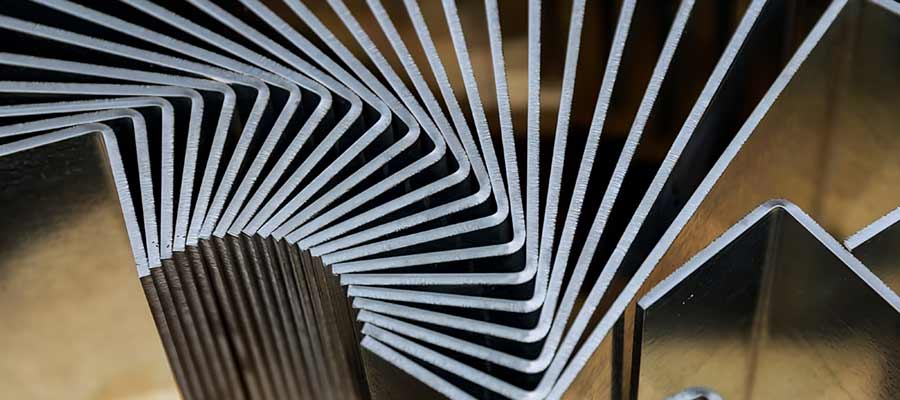
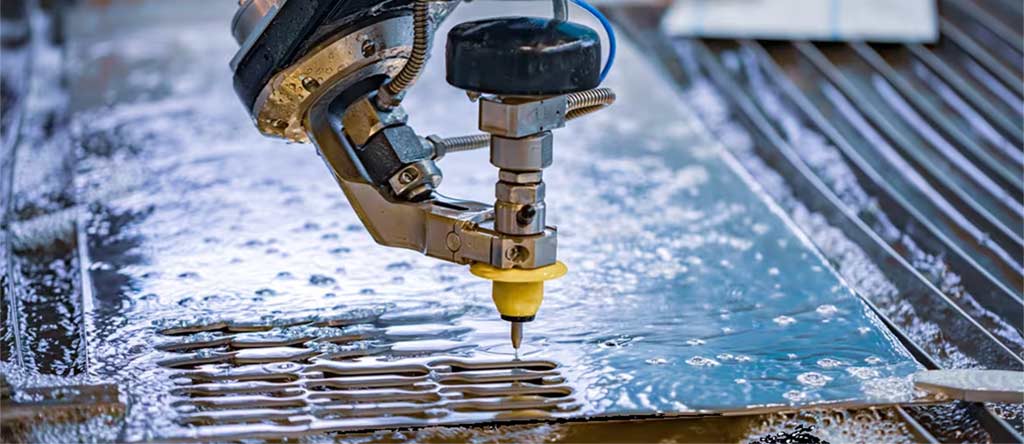
| Laser/Waterjet | Flat patterns, sheet | Clean cuts, minimal heat | 2D only |
| Casting/Molding | Very high volume | Low cost at scale | High tooling cost |
Most manufacturers use CNC as the primary process or combine it with others for the best precision-to-cost ratio.
What Affects Cost
Pricing varies. Here’s what drives it.
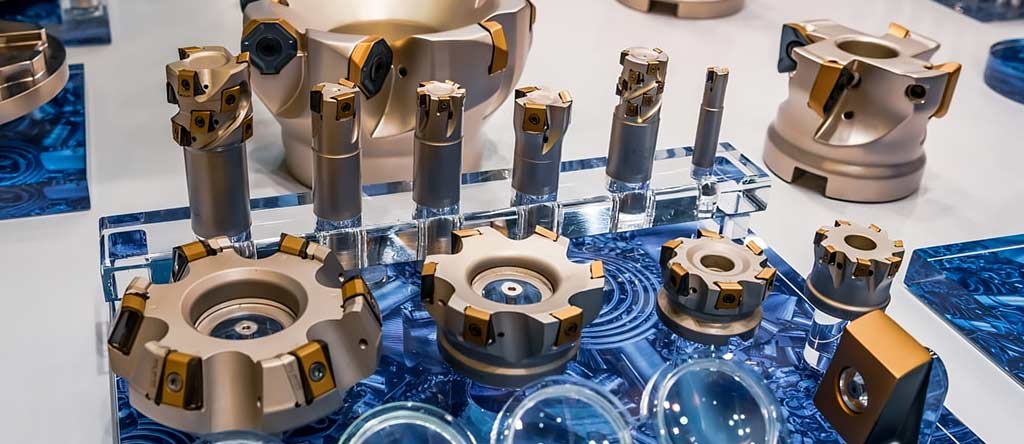
Material type matters. Harder metals like stainless and titanium machine slower. More tool wear. More cost.
Part complexity matters. Tight radii, deep pockets, threads, multi-axis features—all increase programming and machine time.
Tolerances matter. Tighter specs mean longer cycle times and more inspection.
Volume matters. Larger batches reduce per-part cost because setup gets divided across more pieces.
Machine type matters. 5-axis costs more than 3-axis—but it can eliminate multiple setups. Sometimes pays for itself.
The CNC Workflow
Here’s how industrial CNC projects typically work.
Step 1: Submit CAD model and requirements.
Step 2: Engineering review and DFM optimization.
Step 3: CAM programming for toolpaths.
Step 4: Material sourcing.
Step 5: Machine setup and tooling preparation.
Step 6: Machining cycle.
Step 7: Deburring and finishing.
Step 8: Inspection and quality control.
Step 9: Packaging and delivery.
Structured process. Predictable results. That’s the point.
Industry Trends
A few things shaping manufacturing right now.
Reshoring continues. Domestic production is pushing demand for precision CNC work. Supply chain reliability matters more than it used to. Companies learned that lesson the hard way recently.
Automation keeps expanding. Robotics and lights-out operations are becoming standard for competitive shops. If you’re not automating, you’re falling behind.
Digital twins and smart machining improve accuracy and maintenance planning. Less downtime. Better predictions. Machines that tell you when they need service before they break.
Multi-axis adoption is growing. Fewer setups. Less handling. Better parts. The price premium is worth it for complex work.
Sustainability matters more every year. Better material utilization. Tool life tracking. Energy-efficient equipment. Customers ask about it. Regulators require it.
The direction is clear. More automation, more precision, more efficiency. CNC is central to all of it.
FAQs
What industries rely most on CNC machining?
Aerospace, automotive, medical, defense, electronics, energy, industrial equipment. Basically any industry that needs precision metal parts.
Are CNC parts better than 3D-printed parts?
For metals and high-load components, yes. CNC offers stronger materials, better tolerances, and superior surface finish. 3D printing has its place for prototypes and complex internal geometries.
How long does CNC machining take?
Simple parts might be done in hours. Complex multi-operation components can take days. Depends on the job.
Can CNC make fully custom parts?
Absolutely. As long as you have a CAD model, CNC equipment can machine one-off, low-volume, or highly specialized components.
What file types do shops need?
STEP and IGES are most common. Solid-model CAD files work best. PDFs help clarify requirements.
Is CNC cost-effective for small batches?
Yes. Setup costs are reasonable. Small runs still benefit from precision and consistency. Just won’t be as cheap per part as high volume.
How does CNC compare to manual machining?
Faster. More consistent. Less dependent on operator skill. Manual has its place for one-offs and repairs, but production belongs to CNC.
What tolerances can CNC achieve?
Depends on the machine and material, but ±0.0005″ to ±0.002″ is typical. Tighter tolerances are possible with the right equipment and setup.
Why Styner Machine Tools
Styner Machine Tools offers precision CNC milling, turning, prototyping, and production machining.
One-off engineering parts or full-scale batches. Accuracy, speed, and reliability across every job.
When your manufacturing needs precision, Styner delivers.