First time I watched someone mill hardened steel, I thought the machine was going to shake itself apart. This was maybe fifteen years ago at a shop in Detroit. Guy running the mill—name was Jerome, been doing this work since the early ’80s—just stood there watching the cut like it was perfectly normal.
“You get used to the sound,” he said. “What you listen for is changes. When it stops sounding angry and starts sounding wrong, that’s when you’ve got problems.”
Hard materials fight back. That’s the fundamental reality of precision milling on steel, titanium, Inconel, or hardened alloys. These materials don’t want to be cut. They generate enormous heat. They chew through tooling. They punish any sloppiness in setup or technique.
But here’s what Jerome knew that I didn’t understand yet: CNC milling has gotten incredibly good at handling exactly these challenges. The right machines, the right tooling, the right approach—you can cut materials that would’ve been nearly impossible to work with a generation ago. Tolerances in the thousandths. Surface finishes that need minimal post-processing. Repeatability across production runs that used to require hand-fitting.
That’s what this article is about. How CNC milling actually achieves ultra-precise cuts in hard materials, and what makes the difference between shops that struggle with this work and shops that make it look easy. The gap between those two categories is bigger than most people realize.
Quick Reference: Hard Material CNC Milling
| Feature | Details |
| Material Range | Steel, titanium, aluminum, hardened alloys, select plastics and composites |
| Achievable Precision | ±0.001″ to ±0.005″ typical, tighter in controlled conditions |
| Tool Lifespan | Tens to hundreds of hours depending on material and cooling strategy |
| Cost Range (USA) | $50–$200/hour for precision milling work |
| Primary Applications | Aerospace components, medical implants, industrial molds and dies, defense equipment |
What Makes CNC Milling Actually Work on Hard Stuff
Talked to a tooling engineer last year—woman named Rachel who’s spent about fifteen years figuring out how to make cutting tools last longer on difficult materials. She had a way of explaining it that stuck with me.
“Hard material milling is a negotiation,” she said. “You’re trying to remove metal faster than the metal removes your tool. Win that negotiation and you get good parts. Lose it and you get scrap and broken cutters.”
CNC milling wins that negotiation through three things working together: precision movement, advanced tooling, and smart process control.
Precision Movement
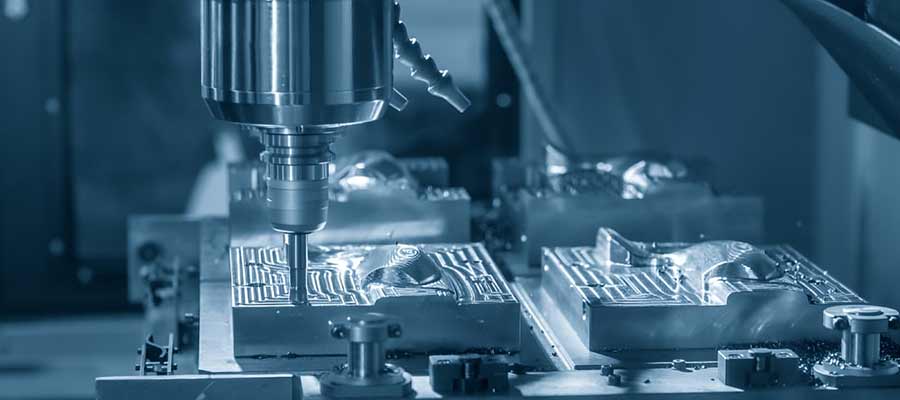
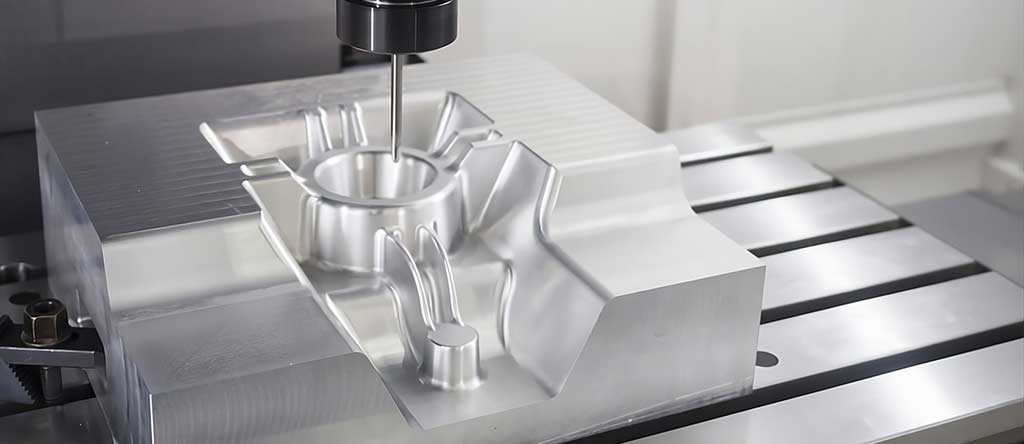
Modern CNC mills move cutting tools with accuracy measured in microns. Servo motors and ball screws translate digital commands into physical motion with essentially zero slop. The machine goes exactly where the program tells it to go—no interpretation, no drift, no operator variability.
Multi-axis machines take this further. A 5-axis mill can rotate and tilt the tool or workpiece while cutting, approaching complex geometries from optimal angles. What used to require multiple setups and operations now happens in one. Fewer setups means fewer opportunities for error to creep in. And fewer errors means better parts.
Advanced Tooling
The cutting tools themselves have gotten remarkably sophisticated. Carbide and ceramic inserts maintain sharp edges even under extreme forces. Coatings like TiAlN (titanium aluminum nitride) reduce friction and heat transfer, letting the tool work longer before wearing out.
Rachel showed me a comparison once—same cutting operation, same material, same machine. Uncoated tool lasted about 45 minutes before it was done. Coated tool? Still going strong at four hours. That’s not a small difference.
Smart Process Control
The software side matters just as much. CAM programs optimize tool paths to minimize stress and heat buildup. Adaptive clearing strategies adjust cutting engagement based on what the tool is actually encountering. Real-time monitoring catches problems before they become catastrophes.
Put all three together and you’ve got a system that handles hardened steel, titanium, Inconel—materials that would’ve been nightmares to machine a generation ago—with consistency and precision that’s honestly kind of remarkable when you think about what’s actually happening.
How CNC Milling Stacks Up Against Alternatives
Other methods exist for cutting hard materials. Each has a place. But here’s how they actually compare:
Traditional milling can technically cut hard materials, but maintaining consistent tolerances is brutal. Operator fatigue matters. Tool wear affects dimensions over a production run. For one-off parts with generous tolerances, maybe. For precision production work, it’s not competitive.
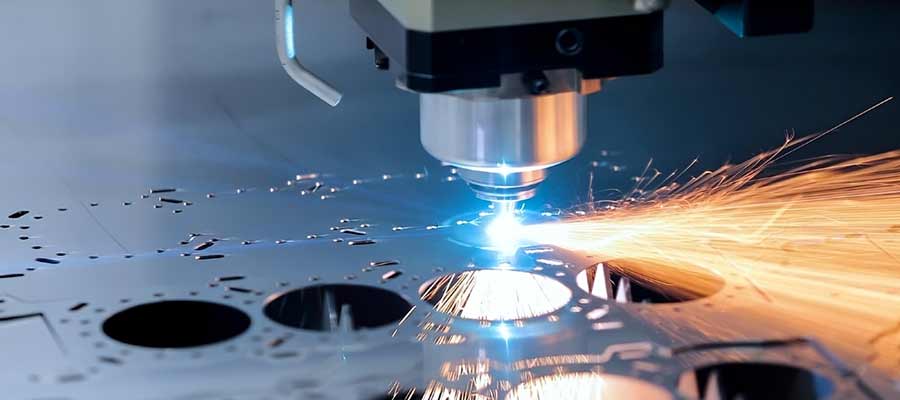
Laser cutting works great on thin materials and certain geometries. Fast, clean, no tool wear in the traditional sense. But thick hardened stock? Laser struggles with depth. You’re also limited in the complexity of features you can create.
Waterjet handles thickness better than laser and cuts almost anything. But precision tops out around ±0.003″ to ±0.005″ in most applications—good, but not what you’d call ultra-precise. Surface finish typically needs secondary operations too.
EDM (electrical discharge machining) achieves incredible precision on hard materials. For certain applications—intricate die work, extremely tight tolerance features—nothing beats it. But it’s slow. Really slow. And it’s limited to conductive materials.
CNC milling hits a sweet spot: precision comparable to EDM on many features, speed closer to traditional methods, versatility across geometries and materials. That combination is why it dominates hard material precision work. Other methods have their place, but CNC handles the widest range of applications.
The Heat Problem (And How Good Shops Handle It)
Here’s the thing about cutting hard materials: most of the energy from machining turns into heat. That heat has to go somewhere. If it goes into your tool, the tool dies. If it goes into your workpiece, you get dimensional changes and warping. Neither outcome is good.
A process engineer named Tom—works for an aerospace supplier I visited last year—showed me thermal imaging of a milling operation on Inconel. The cutting zone was glowing. Literally glowing on the camera. “That’s 800 degrees right at the tool tip,” Tom said. “Managing that heat is basically our whole job.”
How do you manage it? Three main approaches:
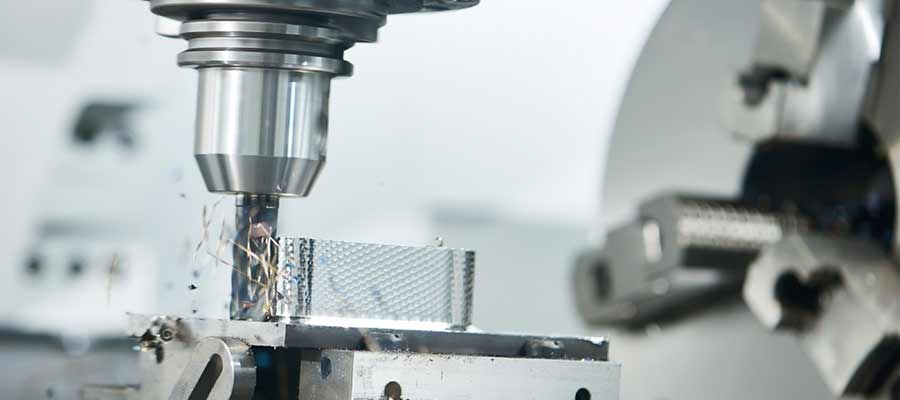
- Coolant strategy – High-pressure coolant floods the cutting zone, carrying heat away and flushing chips out before they can cause problems. Some shops use MQL (minimum quantity lubrication) for cleaner operation with less waste. The right approach depends on the material and operation.
- Tool path optimization – The way you move through the material matters enormously. Trochoidal milling keeps the tool in constant motion, reducing heat concentration. Adaptive clearing adjusts engagement based on conditions. Smart tool paths can double or triple tool life.
- Real-time monitoring – Sensors track vibration, temperature, cutting forces, and spindle load. Anomalies get flagged before they become failures. Some systems automatically adjust parameters when conditions change. This isn’t optional anymore for serious precision work.
Tom’s shop runs tools significantly longer than industry averages on the same materials. Not because they have magic equipment—because they’ve invested in understanding heat management at a deep level. “Every hour of tool life we gain is money,” he said. “It adds up fast.” He wasn’t exaggerating. I saw the numbers.
Where Ultra-Precise Hard Material Milling Shows Up
The industries that need this capability tend to be the ones where failure isn’t an option and precision pays for itself.
Aerospace
Turbine blades. Structural brackets. Housing components. The parts that keep aircraft flying need materials strong enough to handle extreme stress and temperatures—which means hard alloys—machined to tolerances tight enough that everything fits and functions exactly as designed. No margin for “close enough” when you’re flying at 40,000 feet.
An aerospace machinist I know jokes that his scrap bin is the most expensive garbage can in the building. Titanium isn’t cheap. Getting it right the first time matters. Every scrapped part comes directly off the bottom line.
Medical Devices
Surgical instruments. Implants. Orthopedic hardware. These parts go inside people. The materials need to be biocompatible—often titanium or specialized alloys—and the finishes need to be smooth enough that tissue responds well. Dimensional accuracy determines whether an implant fits properly.
CNC milling produces medical components that need minimal finishing. Fewer secondary operations means less handling, less contamination risk, faster time to sterilization and use.
Industrial Tooling
Molds. Dies. Fixtures. The tools that make other things need to be harder than the materials they’re working with and precise enough to produce consistent results across millions of cycles. Hardened tool steel, machined to mirror finishes and exact dimensions.
A die that’s off by a few thousandths might work for the first thousand parts. By the hundred-thousandth part, that error has compounded into real problems. Precision upfront prevents headaches downstream. The shops that understand this invest accordingly.
How a Hard Material Milling Project Actually Runs
The shops that consistently produce good results on difficult materials follow a disciplined process:
- Material analysis – Before cutting starts, understand what you’re dealing with. Hardness, thermal conductivity, work hardening tendency. Different alloys behave differently even within the same family.
- Tool selection – Match cutting tools to the specific material. Geometry, coating, substrate—all matter. What works on 4140 steel won’t necessarily work on Inconel 718.
- CAM programming – Design tool paths that manage engagement, heat, and stress. This is where experience shows. Good programmers know tricks that keep tools alive and parts accurate.
- Machine setup – Rigid workholding, proper alignment, verified zero points. Sloppiness here shows up in finished parts. Every time.
- Monitored cutting – Watch the operation, especially on the first part. Listen, measure, adjust. The machine will tell you what’s working if you pay attention.
- Inspection – Measure critical features. Verify surface finish. Document results. This isn’t optional on precision work.
- Finishing as needed – Deburring, polishing, secondary operations if required. Not every part needs extensive finishing—CNC can often produce near-final surfaces directly.
Skip steps and you’ll find out eventually. Usually at the worst possible time.
Where Hard Material Milling Is Heading
Been paying attention to what’s changing in this space. Few developments worth noting:
- AI-driven optimization – Machine learning analyzing cutting data to recommend parameters. Still early days, but the potential is significant. Machines that get smarter over time.
- Hybrid machines – Combining milling with additive manufacturing or grinding in a single setup. Print near-net shape, then mill to final dimensions. Opens up geometries that weren’t practical before.
- Sustainable cooling – Environmental pressure pushing development of dry machining and minimum quantity lubrication techniques. Less coolant, less waste, lower operating costs.
- Shorter lead times expected – Customers want parts faster. The shops investing in capability and efficiency are winning work from slower competitors.
- Domestic production rebounding – Supply chain disruptions pushed manufacturing back toward local sources. Shops with hard material capability are busier than they’ve been in years.
The fundamentals haven’t changed—you’re still negotiating with stubborn materials—but the tools for winning that negotiation keep getting better. Shops that stay current with technology and technique have significant advantages over those running equipment and processes from ten years ago.
FAQs
1. What materials can CNC mills actually handle?
Pretty much anything that can be cut with a rotating tool. Steels of all types, titanium, aluminum, hardened alloys like Inconel and Hastelloy, even some plastics and composites. The harder the material, the more the process details matter—but CNC mills handle the range.
2. How precise can CNC milling actually get?
Typical precision runs ±0.001″ to ±0.005″ depending on the operation and setup. With careful attention to temperature control, machine calibration, and measurement, tighter tolerances are achievable. Single-digit micron precision exists in specialized applications.
3. How do you make cutting tools last longer on hard materials?
Multiple factors: use the right tool for the material (carbide or ceramic, appropriate coating), optimize tool paths to manage heat and engagement, run proper coolant strategy, and monitor for wear before tools fail catastrophically. The details add up.
4. Can CNC milling work alongside other processes?
Absolutely. Hybrid machines combine milling with additive manufacturing or grinding. More commonly, shops use CNC milling as part of a multi-step process—rough blanks from waterjet or saw, precision features from milling, finishing operations as needed. Integration is common.
5. How long do CNC cutting tools actually last?
Depends enormously on material, cutting conditions, and maintenance. Could be tens of hours, could be hundreds. Tool monitoring helps predict when changes are needed. Shops that track this data closely get more life from their tooling than shops that guess.
6. What drives the cost of hard material milling?
Material itself (hard alloys aren’t cheap), machine time (precision takes longer), tooling consumption (hard materials eat tools), and complexity (tight tolerances require more careful work). Simple parts in easy materials cost less. Complex parts in difficult materials cost more. No surprises there.
Why Styner Machine Tools for Hard Material Milling
Styner Machine Tools has been handling hard material precision milling for years. Multi-axis capability. Advanced tooling. Process knowledge built from actually doing this work, not just reading about it.
Aerospace components, medical implants, industrial tooling—we’ve machined all of it. We understand what these applications demand and we’ve invested in the capability to deliver.
When you need parts that meet spec in materials that don’t cooperate easily, that’s the work we do. Precision you can count on. Turnaround that works with your schedule. Quality that doesn’t require hope or heroic effort on your end.
American manufacturing. Real expertise. Hard materials handled right.
Contact Styner Machine Tools at CNCFAB.SHOP to discuss your project.