Quick answer first.
CNC machines make metal engraving faster, more precise, and incredibly consistent.
Every serial number identical. Every logo perfect. Every marking exactly where it belongs.
Manual engraving? It’s slow. Inconsistent. Prone to the kind of human error that costs money.
CNC? Fast. Accurate. Same result every single time you run it.
I’ve watched shops struggle with manual engraving for years. Skilled operators, sure. But even the best ones can’t match what a programmed machine delivers at volume. They just can’t.
For manufacturers who need reliable markings on metal parts—serial numbers for traceability, logos for branding, decorative patterns for aesthetics—CNC is the clear answer.
Here’s the breakdown.
Snapshot
| Factor | What to Know |
| Machine lifespan | 10–20 years with proper maintenance |
| Equipment cost | $15,000–$100,000 depending on capabilities |
| Compatible metals | Aluminum, stainless, brass, copper, titanium, alloys |
| Engraving methods | Rotary, laser, dot peen, or hybrid combinations |
| Precision level | Micrometer-level accuracy for text, logos, patterns |
Precision That Actually Matters
CNC engraving is all about accuracy.
These machines follow computer instructions down to the micrometer. Every engraving comes out clean. Every character legible. Every line exactly where the program says it should be.
Tiny serial numbers? Perfect. Intricate logos? Sharp and clear. Complex patterns? No problem.
I’ve seen manual engravers try to match CNC quality. They can’t. Not consistently. Not at volume. Human hands drift. Attention wanders. By part number 50, the quality starts slipping. By part 500? Forget it.
And here’s the real advantage.
Once the program is set up, it runs forever. You can produce hundreds of parts—thousands of parts—and every single one will match. Same depth. Same positioning. Same quality. Part one and part one thousand are identical.
That repeatability is critical for industries like aerospace, medical devices, and electronics. Traceability requirements. Compliance standards. Situations where inconsistent markings create real problems—or fail audits.
Modern software makes it even easier. Import vector graphics directly. Scale designs automatically. What shows on your screen ends up on the metal. No guesswork. No manual errors. No interpretation.
Works With Any Metal
CNC machines are incredibly adaptable.
Soft aluminum? Works great. Tough stainless? No problem. Hardened tool steel? Absolutely. Titanium? Yes, that too. Brass, copper, nickel alloys—all of them.
The machine adjusts. Different cutting tools. Different feed rates. Different speeds. Whatever the material needs to produce clean, consistent engravings.
And it’s not just about material compatibility. CNC systems handle a huge range of part sizes and geometries.
Tiny surgical instruments with serial numbers? Done. Large metal panels with company logos? Also done. Complex housings with markings on multiple faces? Handled.
5-axis machines even engrave curved or angled surfaces with the same precision as flat ones. The tool tilts to maintain perpendicular contact with the surface. Same quality regardless of geometry.
That flexibility means one machine—or one shop—can handle diverse engraving needs. No specialized equipment for every different job. No farming out work to different vendors.
Different Methods for Different Needs
Not all engraving is the same. CNC offers multiple approaches.
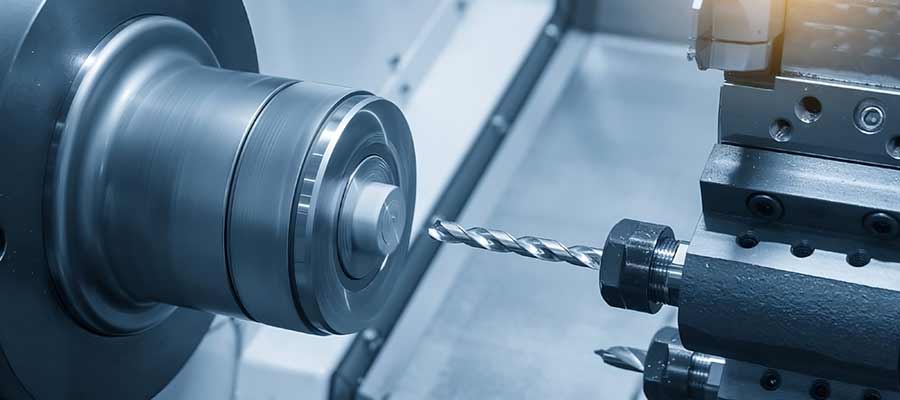
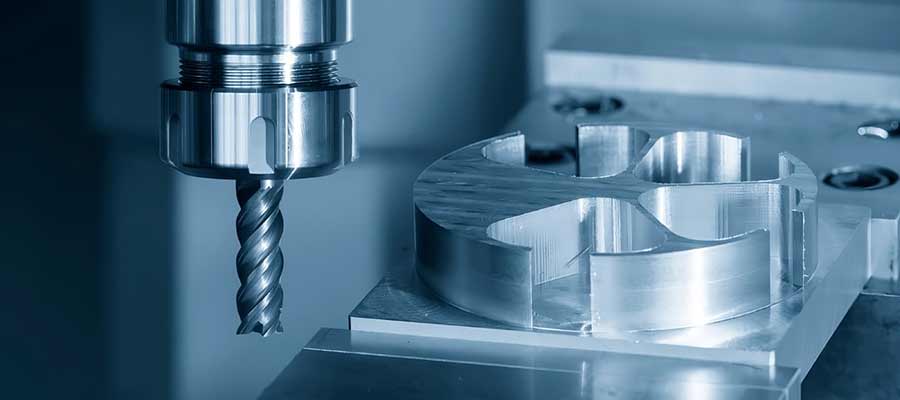
Rotary engraving uses spinning cutting tools to physically carve into the metal. Deep, durable marks that last forever. Ideal when you need markings that survive harsh environments—heat, chemicals, abrasion, outdoor exposure.
Laser engraving burns or vaporizes surface material. Fast. High contrast. Crisp detail. Great for high-volume marking where speed matters and you don’t need deep penetration into the surface.
Dot peen marking creates patterns of small indentations. Tough markings that hold up on industrial parts subject to wear and abuse. Common in automotive and heavy equipment applications.
Each method has its place. The right choice depends on your material, environment, and requirements.
Here’s the cool part.
Some CNC systems combine methods in a single setup. Engrave deep lettering with rotary tools while a laser marks barcodes—same operation, no repositioning. Less handling means faster production and fewer errors.
Speed and Cost Efficiency
Time is money. CNC engraving saves both.
Once your design is loaded and the machine is set up, parts can be engraved continuously. Minimal supervision required. High-speed spindles and lasers can mark a component in seconds.
Compare that to manual methods. Slow. Labor-intensive. Prone to mistakes that require rework. An engraver might spend 10 minutes on a part that CNC marks in 10 seconds.
Do that math across a thousand parts. The difference is massive.
Automation also eliminates errors. No more smudged serial numbers. No more uneven logos. No more markings in the wrong location. No more scrapped parts because someone made a typo.
Over time, the economics are obvious. Reduced labor costs. Less waste from rejected parts. Longer tool life. Faster throughput. Better quality.
The upfront investment pays for itself. Usually faster than people expect.
Industry Trends
CNC metal engraving is growing for several reasons.
Regulatory requirements are tightening. More industries require permanent, traceable markings on components. Aerospace, medical, automotive—all demanding better documentation.
Personalization is expanding. Custom products, serialized components, branded parts—all driving demand for flexible, precise engraving.
Technology keeps improving. AI integration. IoT monitoring. Predictive maintenance. Faster production cycles. Better software.
Shops that invest in modern CNC engraving capabilities have a real competitive advantage. Faster turnaround, better quality, lower costs.
CNC vs. Other Engraving Methods
So how does CNC stack up against the alternatives? Let’s look at this honestly.
| Method | Speed | Consistency | Best For |
| CNC Engraving | Fast | Excellent | Production, complex designs |
| Manual Engraving | Slow | Variable | One-off artistic work |
| Stamping/Etching | Medium | Good | Simple, high-volume marks |
| Laser Only | Very Fast | Excellent | Surface marks, no depth |
CNC wins on versatility. It combines multiple methods, handles different materials, and produces complex designs that other approaches can’t match.
What Affects Quality and Cost
Several factors influence results and pricing.
Material hardness matters. Softer metals engrave faster and easier. Harder metals need slower speeds and specialized tooling.
Design complexity matters. Intricate patterns take longer to program and execute. Simple text is quick.
Machine capabilities matter. 3-axis systems handle flat surfaces well. 5-axis machines tackle curves and angles.
Method choice matters. Rotary, laser, dot peen—each has different costs and ideal applications.
Batch size matters. Large runs maximize efficiency. Small batches still benefit from CNC precision but cost more per part.
Understanding these factors helps you plan production and manage costs effectively.
The Engraving Process
Here’s how CNC engraving typically works. Pretty straightforward once you understand it.
Step 1: Design prep. Create or import vector files, CAD drawings, or logo artwork. The cleaner your files, the better your results.
Step 2: Programming. Convert the design into G-code the machine can execute. Modern CAM software handles most of this automatically.
Step 3: Machine setup. Mount the material, select tools or laser settings, run a test if needed.
Step 4: Engraving. The CNC machine executes the program. Watch it run or walk away—it doesn’t need supervision.
Step 5: Inspection. Verify accuracy and consistency meet requirements. Check a few samples, especially on new jobs.
Simple process. Consistent results. Works the same regardless of material, shape, or batch size.
FAQs
What metals can CNC machines engrave?
Pretty much all of them. Aluminum, stainless steel, brass, copper, titanium, various alloys. The machine settings adjust for different materials. Softer metals run faster, harder metals need more patience.
How precise is CNC engraving?
Micrometer-level precision. Every engraving comes out clear and consistent, part after part. That’s the whole point.
Is CNC engraving cost-effective for small batches?
Yes. Even small runs benefit from the speed, precision, and repeatability. Setup costs are reasonable for most applications. You’re not going to beat manual on a single piece, but anything beyond that? CNC wins.
Can CNC engrave curved surfaces?
Absolutely. 5-axis systems handle angled and curved surfaces with the same precision as flat ones. The tool tilts to maintain the right angle.
How does CNC compare to laser-only systems?
More versatile. CNC combines rotary, laser, and dot peen methods. Laser-only systems are fast but limited to surface marking without depth. If you need deep engraving, laser alone won’t cut it.
What industries use CNC engraving most?
Aerospace, medical devices, electronics, automotive, industrial equipment—anywhere traceability, compliance, or branding require consistent, permanent markings.
How deep can CNC engrave into metal?
Depends on the method. Rotary engraving can cut deep—several millimeters if needed. Laser typically marks the surface. Match the method to your depth requirements.
Can CNC engrave barcodes and QR codes?
Absolutely. Laser and dot peen methods excel at machine-readable codes. High contrast, precise spacing, scannable results.
Why Styner Machine Tools
Styner Machine Tools brings experience, precision, and speed to every engraving project.
Serial numbers. Logos. Decorative patterns. Whatever your parts need marked, we make sure it’s accurate, consistent, and production-ready.
When quality matters, Styner delivers.