Let’s be clear about something.
In aerospace, precision isn’t important. It’s everything.
Think about it. You’re building components that will fly at 500 miles per hour, 35,000 feet in the air, carrying hundreds of people. Every part has to be right. Not close. Not almost. Right.
A landing gear component that’s off by a few thousandths of an inch? At those speeds and loads, that’s not a minor problem. That’s a potential catastrophe.
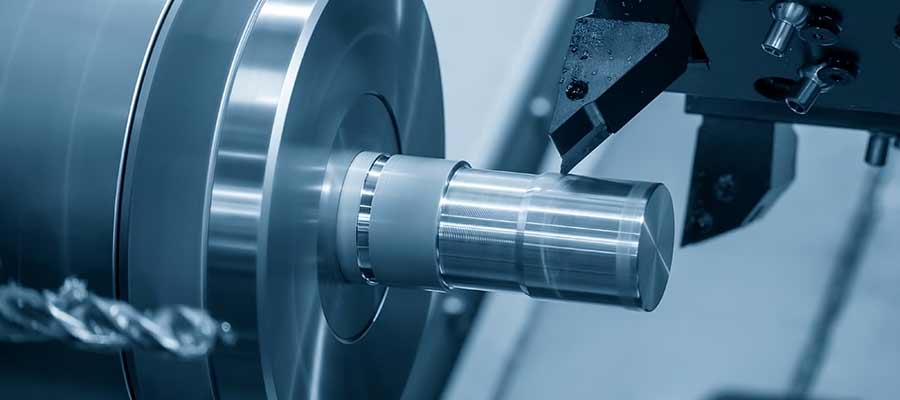
That’s why CNC machining dominates aerospace manufacturing. Computer-controlled cutting that hits tolerances no human could match consistently. Repeatability across thousands of parts. The ability to machine exotic materials that would destroy ordinary equipment.
Here’s how it works and why it matters.
Snapshot
| Factor | Aerospace Reality |
| Component lifespan | 20–30 years with proper maintenance. Built to last. |
| Cost range | Hundreds for brackets. Tens of thousands for turbine blades. |
| Common materials | Aluminum, titanium, stainless, Inconel, composites |
| Why CNC dominates | Precision, repeatability, material capability, compliance |
Why Precision Is Non-Negotiable
Aerospace tolerances are tight. Incredibly tight.
We’re talking measurements smaller than a human hair. Deviations that would be invisible to the naked eye but could cause catastrophic failures at altitude.
Think about an engine turbine blade. Spinning at tens of thousands of RPM. Temperature gradients that would melt ordinary metal. If the balance is off by fractions of a gram, you get vibration. Vibration causes wear. Wear causes failure. Failure at 35,000 feet causes headlines.
CNC machining eliminates the guesswork.
Computers guide cutting tools along exact paths. Same motion every time. Tolerances that would be impossible to achieve manually get hit consistently, part after part, day after day.
I’ve watched machinists hand-make aerospace parts. Skilled people. Decades of experience. But even the best can’t match what a programmed 5-axis machine delivers at volume. The human body drifts. Attention wavers. Machines don’t have those problems.
That consistency is why CNC owns aerospace manufacturing. Not because humans aren’t good enough. Because the requirements exceed what humans can reliably deliver.
Machining the Toughest Materials
Aircraft parts aren’t made from ordinary metals.
Engineers need materials that are light but strong. Heat-resistant but workable. Corrosion-proof but affordable. Finding that balance is the whole challenge of aerospace materials science.
CNC machines handle the materials aerospace demands.
Aluminum alloys for structural parts. Lightweight. Corrosion-resistant. The workhorse of aircraft construction. Most of the airframe is aluminum. CNC mills cut it fast and clean.
Titanium for engine components and high-stress areas. Tough. Heat-resistant. Expensive, but worth it where it matters. Harder to machine than aluminum—slower cuts, more tool wear—but CNC handles it.
Inconel for turbine parts. Handles extreme temperatures that would melt ordinary metals. Brutal to machine. Destroys tooling. But CNC equipment does it, day after day, with the precision aerospace requires.
Advanced composites for weight reduction. Strong but light. Increasingly common in modern aircraft. Different machining approach—routing rather than milling—but CNC manages it.
Each material has its quirks. Different speeds. Different feeds. Different tooling. CNC programs account for all of it. Raw material becomes flight-ready components.
Speed and Prototyping
Aerospace projects move fast. Delays cost millions.
A day late on a development program can ripple through the entire schedule. Certification timelines slip. Launch dates move. Competitors gain ground.
CNC machines help manufacturers keep pace.
Automation handles complex operations. Reduces manual labor. Speeds production. Multi-axis machines complete parts in single setups that would have required multiple operations before. Less handling. Fewer errors. Faster throughput.
Rapid prototyping might be the biggest advantage.
Engineers design a part. Machine a prototype. Test it under actual loads. Find problems. Tweak the design. Machine another version. All within days.
Think of it as a dress rehearsal for aircraft components. Mistakes get caught before production ever starts. Before expensive tooling gets built. Before certification testing reveals a flaw that sends the program back to square one.
I’ve seen engineering teams iterate through five versions of a bracket in a week. By Friday they had a design that passed all the tests. Try that with traditional methods. You’d be arguing about tooling quotes while they’re already flying.
That iteration speed matters enormously in aerospace development.
Quality and Compliance
Aerospace is heavily regulated. For good reason.
FAA requirements. AS9100 standards. Documentation requirements that would choke other industries. Every part has to perform reliably because lives depend on it. Literally.
The paperwork alone can sink a shop that isn’t prepared. Traceability from raw material to finished part. Process documentation. Inspection records. Deviation reports. It never ends.
CNC machining helps manufacturers meet these standards.
Automated processes mean every part comes out the same. Documentation is straightforward—the machine recorded exactly what it did. Spindle speeds. Feed rates. Tool changes. All logged.
Inspections are smoother because you’re checking consistent parts, not variations. When part 500 matches part 1, the inspector relaxes. A little.
Certification becomes less painful. When you can prove your process produces identical results, auditors have less to question. Documentation exists. Traceability works. The system functions.
Engineers get to focus on innovation instead of worrying whether the shop will hit tolerances this time. Trust the process. Move forward.
Complex Geometries
Here’s where CNC really shines.
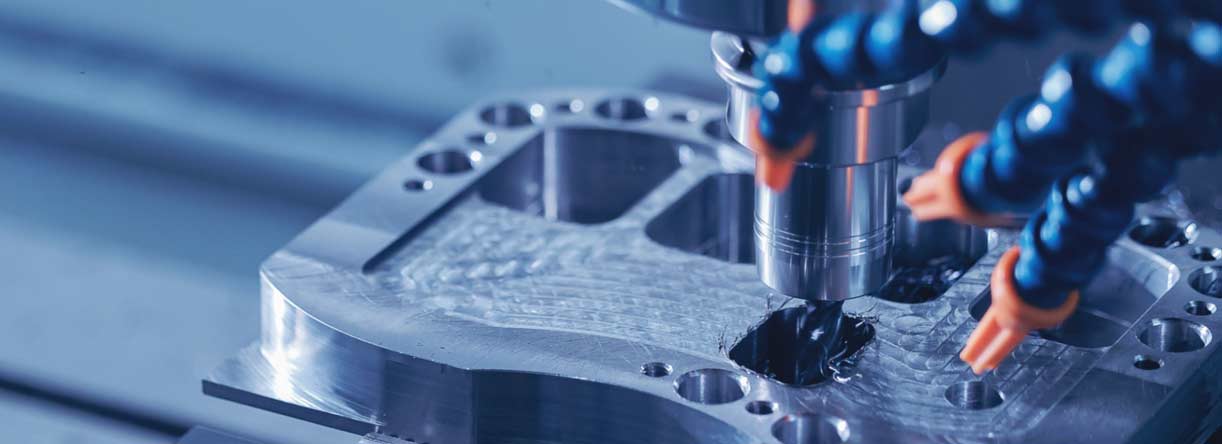
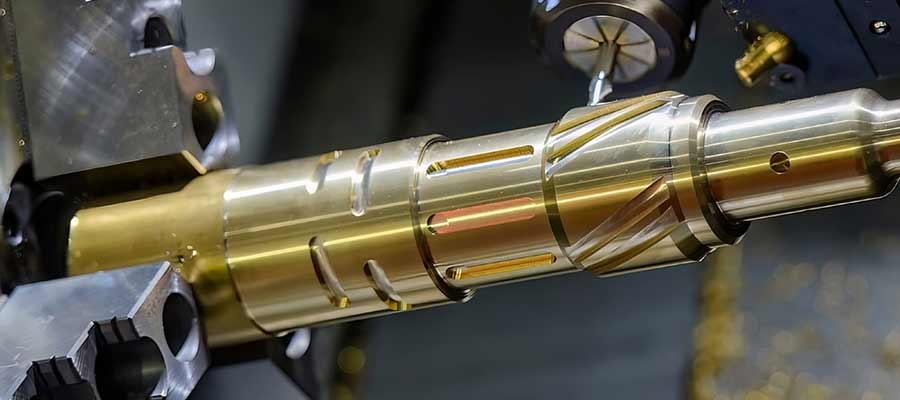
Multi-axis machines—4-axis, 5-axis—can create shapes that traditional methods simply can’t touch. Or would take forever to produce.
Aerodynamic profiles that improve fuel efficiency. The curves matter. Get them wrong and the aircraft burns more fuel for its entire service life.
Lightweight structures that maintain strength. Internal pockets that reduce weight without compromising load capacity.
Cooling channels for engines and turbines. Complex internal geometries that manage heat in ways solid parts can’t.
Designers can push boundaries. Create components that are lighter, stronger, more efficient than what was possible before.
CNC makes those designs manufacturable.
The Aerospace CNC Workflow
Here’s how aerospace parts get made.
Step 1: Design. Engineers create detailed CAD models with dimensions, tolerances, and material specs.
Step 2: Material selection. Pick the right alloy or composite for the application.
Step 3: Programming. CAM software converts the design into machine instructions.
Step 4: Machining. CNC equipment shapes the material with micron-level precision.
Step 5: Inspection. Every component gets measured and verified.
Step 6: Certification. Parts get documented and approved per FAA and AS9100 standards.
Step 7: Delivery. Components go to assembly or integration, ready for flight.
Disciplined process. Consistent results.
Industry Trends
Aerospace manufacturing keeps evolving. A few trends worth noting.
Hybrid manufacturing is growing. Combining CNC machining with 3D printing for complex, lightweight components. Best of both worlds.
Composite use keeps expanding. Reducing weight while maintaining structural integrity. More composite means different machining approaches.
Regional suppliers are investing in advanced equipment. Rapid prototyping and small-batch production closer to OEMs. Faster turnaround.
The direction is clear. Faster, lighter, more efficient aircraft. CNC machining is essential to making that happen.
FAQs
Why is CNC so critical in aerospace?
Precision. Repeatability. Material capability. You need all three for safety-critical flight components. CNC delivers them.
What materials can CNC machines handle?
Aluminum, titanium, stainless steel, Inconel, advanced composites. The tough materials aerospace requires.
Can CNC create complex aerospace designs?
Absolutely. Multi-axis machines produce geometries that would be impossible with traditional methods. That’s their strength.
How does CNC speed up production?
Automation reduces setup time. Minimizes human error. Enables rapid prototyping. Parts get made faster with fewer problems.
Does CNC help with FAA compliance?
Yes. Consistent precision, accurate documentation, adherence to AS9100 standards. Makes certification more straightforward.
What’s the typical cost for aerospace CNC work?
Varies enormously. Simple brackets might be hundreds. Complex turbine components can be tens of thousands. You’re paying for precision and compliance.
How long do aerospace CNC parts last?
Decades with proper maintenance. These components are built to handle millions of cycles. Quality machining is part of that longevity.
Can small shops handle aerospace work?
If they have the certifications, equipment, and quality systems. AS9100 certification is typically required. The bar is high, but capable shops clear it.
Why Styner Machine Tools
Styner Machine Tools combines decades of machining expertise with modern CNC technology for aerospace applications.
Rapid prototyping or full production runs. Every component meets strict industry standards.
When aerospace projects need precision, Styner delivers.